Offshore Courses
Offshore Personal Survival
Techniques
Duration: 2 days
Course Objectives:
This course aims to meet the mandatory minimum requirements for seafarers
for familiarization, basic safety training and instruction in accordance with
Section A-VI/1 of STCW Code and the British Wind Energy Association Marine
Survival training requirements.
Course Outline:
- Travel
safely by vessel to an offshore instillation.
- Work
safely offshore.
- Respond
to vessel & rig emergencies.
- The
location and use of life-saving appliances.
- Emergency
radio equipment.
- Emergency
radio equipment.
- Helicopter
assistance.
Offshore Fire Prevention and
Fire Fighting

Duration: 3 days
Course Objectives:
This course aims to provide the training for candidates working on offshore
instillations and gas industry in fire prevention and fighting in accordance to
OPITO Approved standards.
Course Outline:
- Minimize
the risk of fire - Maintain a state of readiness to respond to emergency
situations involving fires.
- Organization
of shipboard fire fighting - Maintain a state of readiness to respond to
emergency situations involving fires.
- Location
of fire- fighting appliances and emergency escape routes.
- Fight
and extinguish fires
- Carry
out non firefighting operations
- Enter
the incident area and rescue personnel
Offshore Personal Safety and
Social Responsibilities
Duration: 2 days
Course Objectives:
This course aims to meet the mandatory minimum requirements for seafarers
for familiarization, basic safety training and instruction in accordance with
Section A-VI/1 of the STCW Code.
Course Outline:
- Observe
safe working practices – Contribute to effective human relationships on
board ship.
- Comply
with emergency procedures- Take precautions to prevent pollution of the
marine environment.
- Contribute
to effective human relationships on board ship :
social responsibilities- Review and assessment.
Basic Offshore Safety and
Emergency Training Course (BOSIET). OPITO Approved
Duration: 3 days
Course Objectives:
The aim of this course is to ensure that new entrants to the industry and
employees with offshore experience who are new to an installation can
demonstrate competence in: addressing the safety requirements controlling
hazards on the installation acting in an emergency using personal safety
equipment carrying out their individual responsibilities for HS&E.
Course Outline:
- Travel
Safely by Helicopter to an Offshore Installation.
- Live
and Work Safely on an Offshore Installation.
- Respond
to Offshore Installation Emergencies.
Further
Offshore Emergency Training Course. ( FOET
). OPITO Approved
Duration: 2 days
Course Objectives:
The aim of this course is to ensure that new entrants to the industry and
employees with offshore experience who are new to an installation can
demonstrate competence in:
- addressing
the safety requirements
- controlling
hazards on the installation
- acting
in an emergency
- using
personal safety equipment
- carrying out their individual
responsibilities for HS&E.
Offshore
Medical First Aid.
Duration: 2 days
Course Objectives:
This course aims to provide the training for candidates to provide medical
first aid on board Offshore Installations
Course Outline:
- Immediate
Action – First-aid Kit.
- Toxicological
Hazards – Spinal Injuries.
- Spinal
Injuries (Continued)-Burns, Scalds and Effects of Heat and Cold.
- Fractures,
Dislocations and Muscular Injuries- Medical Care of Rescued Persons,
Distress, Hypothermia, and Cold Exposure- Radio Medical Advice-
Pharmacology.
- Sterilization-
Cardiac Arrest, Drowning and Asphyxia – Psychological/Psychiatric
Problems.
Offshore
Helicopter Underwater Escape Training - Survival System-Canada (HUET).
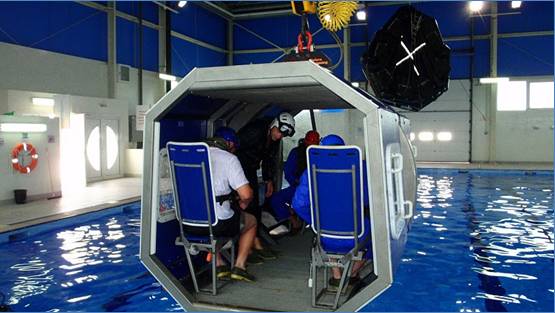
Duration: 2 days
Course Objectives:
The aims of this course are to provide passengers & aircrew with the
knowledge and skills necessary to react to and survive a helicopter ditching.
Also, be able to care for themselves & others in a sea survival situation.
Course Outline:
- Travel
safely by helicopter to an offshore installation.
- Travel
to/from offshore installations.
- Respond
to helicopter emergencies.
- Quick
brief on how to use HUET module.
Tropical
Basic Offshore Safety & Emergency Training (T-BOSIET). (OPITO
Approved).
Duration: 3 days
Course Objectives:
The aims of this course are to provide the necessary knowledge to the
Offshore Oil and Gas Industry Personnel of the Safety elements and emergency
response as per OPITO Standards
Course Outline:
- Safety
Induction
- Helicopter
Safety and Escape
- Sea
Survival
- Firefighting
and Self Rescue
Tropical
Further Emergency Safety Training (T-FOET). (OPITO )
Duration: 2 days
Course Objectives:
This programme is designed to meet the further
onshore safety and emergency response training and assessment requirements for
personnel working in the offshore oil and gas industry.
Course Outline:
- Helicopter
Safety and Escape
- Firefighting
and Self Rescue
- Emergency
First Aid
Offshore Advanced Fire
Fighting.
Duration: 4 days
Course Objectives:
This course aims to provide the training in advanced fire fighting in
accordance with OPITO Approved Standards, and introduces the competence
statements and safety training for the offshore oil & gas industry
personnel.
Course Outline:
- Confirm
the suitability (or otherwise) of any pre-formed plan (time permitting
- Monitor
and control the use of resources
- Evaluate
progress and alter plans as appropriate
- Determine
when incident is completed
ERRV Crew Advanced Medical
Aid.
Duration: 4 days
Course Objectives:
This course aims to provide the training candidates to provide medical care
to the sick and injured while they remain on board offshore installations
, in accordance with OPITO Approved standards.
Course Outline:
- Maintain
state of readiness.
- Prepare
to receive casualties.
- Receive
and treat casualties.
Offshore
Proficiency in Survival Crafts and Rescue Boats other than Fast Rescue Boats.
Duration: 4 days
Course Objectives:
The aims of this course are to provide the training for candidates to
launch and take charge of a survival craft or rescue boat in emergency
situations, in accordance with Section A-VI/2 of the STCW Code and OPITO
Approved standards.
Course Outline:
- Introduction
and safety- general – Abandon ship – survival craft and rescue boat- Lunching arrangements- Evacuation and recovery of
survival craft and rescue boats- Actions to take when clear of the rig.
- Lifeboat
engine and accessories – Rescue boat outboard engines- Handling survival
craft and rescue boats in rough weather – actions to take when aboard a
survival craft – Methods of helicopter rescue
Helicopter
Landing Officer (HLO).
Duration: 2 days
Course Objectives:
This course aims to meet the competence statements and safety training of
the OPITO Approved standards for the offshore landing officer
Course Outline:
- Maintain
a state of readiness.
- Prepare
for emergency
- Supervise
landing and departure.
- Supervise
cargo handling
Offshore
Basic Life Boat Course. COXSWAIN.
Duration: 4 days
Course Objectives:
The aims of this course are to provide the training for candidates to
launch and take charge of a survival craft or rescue boat in emergency
situations, in accordance with OPITO Approved standards.
Course Outline:
- Prepare
for response to emergency on an offshore installation
- Respond
to emergency on an offshore installation.
Offshore
Helicopter Underwater Escape (HUET-EBS). (OPITO
Approved).
Duration: 1 days
Course Objectives:
The aims of this course are to provide passengers & aircrew with the
knowledge and skills necessary to react to and survive a helicopter ditching.
Also, be able to care for themselves & others in a sea survival situation.
Course Outline:
- Travel
safely by helicopter to an offshore installation.
- Travel
to/from offshore installations.
- Respond
to helicopter emergencies.
- Quick
brief on how to use HUET module.
- Escape
techniques from capsized Helicopter
- Use of
EBS
Offshore
Life Boat Course.
Duration: 2 days
Course Objectives:
The aims of this course are to provide the training for candidates to
launch and take charge of a survival craft in emergency situations.
Course Outline:
- Introduction
and safety- general – Abandon ship –lifeboat Lunching arrangements.
- Lifeboat
engine and accessories.
- Actions
to take when aboard a survival craft
Heli-deck Fire Safety.
Duration: 2 days
Course Objectives:
- The
main aim of this course is to make students aware of the basic principles
of the elements of chemistry of fire, to recognize and operate fire fighting equipment in conjunction with the
tactics and techniques required for rescue fire fighting situations and
how effective rescue of crew and passengers could be carried out.
Course Outline:
- Oil
Installation Design & Construction.
- Chemistry
of Combustion
- Fire
& Rescue Operations
- Communications.
- Fire
& Emergency Services.
- Flight
Crew & Cabin Crew Fire Safety
- Aircraft
fires and crashes
Offshore H2S
Protection and Safety.
Duration: 1 days
Course Objectives:
This course aims to provide the training for candidates to provide medical
first aid on board Offshore Installations
Course Outline:
- Immediate
Action – First-aid Kit.
- Toxicological
Hazards – Spinal Injuries.
- Spinal
Injuries (Continued)-Burns, Scalds and Effects of Heat and Cold.
- Fractures,
Dislocations and Muscular Injuries- Medical Care of Rescued Persons,
Distress, Hypothermia, and Cold Exposure- Radio Medical Advice-
Pharmacology.
- Sterilization-
Cardiac Arrest, Drowning and Asphyxia – Psychological/Psychiatric
Problems.
Minimum Industry Safety
Training (MIST) - (OPITO Approved).
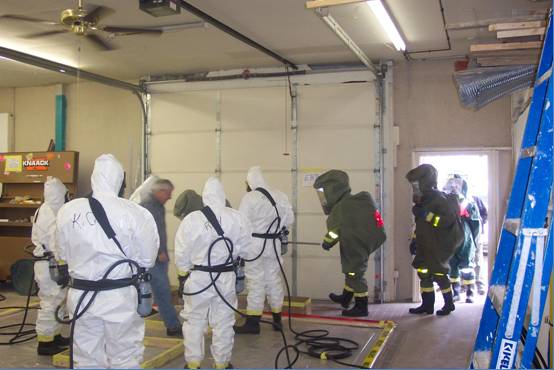
Duration: 2 days
Course Objectives:
- The
objective of this course is to introduce the key safety elements of
offshore
oil & gas industry to all employees, and Gives basic appreciation of potential hazards and controls that may be encountered by personnel offshore. And how to carry out the various tasks and duties associated with working offshore safely, and in a manner that maintains the Safety of himself, his work colleagues and the Offshore Installation
Course Outline:
- Introduction
to the Hazardous Offshore Environment
- Working
Safely (including Safety Observations Systems)
- Understanding
the Risk Assessment Process
- Tasks
that Require Permit to Work
- Personal
Responsibility in Maintaining Asset Integrity
- Controlling
the Use of Hazardous Substances Offshore (COSHH)
- Knowledge
and Practices of Working at Height
- Being
Aware of Mechanical Lifting Activities
Offshore
Tropical Helicopter Underwater Escape (T-HUET). (OPITO
Approved).
Duration: 1 days
Course Objectives:
- The
aims of this course are to provide passengers & aircrew with the
knowledge and skills necessary to react to and survive a helicopter
ditching. Also, be able to care for themselves & others in a sea
survival situation in tropical water.
Course Outline:
- Travel
safely by helicopter to an offshore installation.
- Travel
to/from offshore installations in tropical areas.
- Respond
to helicopter emergencies.
- Quick
brief on how to use HUET module.
- Escape
techniques from capsized Helicopter
Man Over Board (MOB).
Duration: 1 days
Course
Objectives:
- This Course aims to
provide offshore personnel in assigned duties related to Rescuing a Man
Overboard with the Knowledge and Skills required to Carry out this task
safely and efficiently
Course
Outline:
- Checking MOB boat
regarding maintenance and readiness;
- Principle characteristics
regarding good seamanship, determine a compass heading, take control of
equipment as on board;
- Bring drowned person on
board and transportation of drowned person;
- Execution of all
procedures associated with launching, rescue operations and for recovery
of the MOB boat;
- Take command of all
situations which occur during search and rescue of persons who fell over
board;
- Determine and sail search
pattern.
Fire
Emergency Response Heli - Deck.
Duration: 2 days
Course Objectives:
- This
course aims to provide personnel assigned related to helicopter operations
with the necessary Knowledge and skills that enables them to respond
effectively to an emergency occurring on the Helideck
as well as closing the incident response
Course Outline:
- Ensure
that incident responses are in accordance with prescribed company
procedures
- Correctly
use incident response equipment (where required)
- Safely
recover an individual and others affected by the incident, and afford
priority in the actions taken
- Ensure
actions taken do not inhibit incident response effectiveness or further
contribute to the incident
- Create
appropriate documentation including reports, journal entries, logs and/or
clearances are completed in accordance with procedures.
Offshore
Fire Team Member.
Duration: 3 days
Course Objectives:
- This
program is designed to meet the initial onshore training and assessment
requirements for Offshore Emergency Response Team Members as identified in
the UKOOA Guidelines for Competence and Training in Emergency Response.
Course Outline:
- How to
Maintain a state of readiness
- Responding
to emergency and preparing to enter the incident area
- Entering
the incident area and working safely
- Rescue
Of personnel
- Carrying
out firefighting operations
- Carrying
out non firefighting operations
- How to
Maintain effective communications
Crisis
Management and Emergency Procedures.
Duration: 3 days
Course Objectives:
- The aim
of the Crisis Management and Emergency Procedures Course is to train
candidates to implement and practice the procedures required to manage
emergencies that may be encountered at an operational facility
Course Outline:
- How
incidents occur and what should be done before they occur
- The
elements of competency in incident management and incident control
- The
overlaps between emergency management and emergency response, and command
and control versus process control
- Emergency
response structures
- Incident
management and incident control team processes
- Information
management tools
- Tools
for identifying and assessing tasks
- Quick
decision-making and tasking
- Handling
the media
- Dealing
with stress
- Leadership
- Resource
management
- Exercise/drill
management
Offshore Heli-deck
assistant (Helicopter Landing Team Member)
Duration: 2 days
Course Objectives:
- This programme is designed to meet the initial training and
assessment requirements for routine and emergency response operations for
a Helideck Team Member as identified in the
UKOOA Guidelines for Competence and Training in Emergency Response.
Course Outline:
- Arrival
Helicopter Team Member duties
- Interim
Helicopter Team Member duties
- Departure
Helicopter Team Member duties
- Control
the response to emergencies
Offshore
Emergency Helicopter Team Member.
Duration: 2 days
Course Objectives:
- This
Course is designed to meet the initial onshore training requirements for
Offshore Emergency Heli-Deck Team Members as
identified in the UKOOA Guidelines for Competence & Training in
Emergency Response
Course Outline:
- How to
maintain a state of readiness.
- How to
carry out routine equipment checks.
- Responding
to different Helicopter emergencies on/Close to Heli-Deck.
- Minimize
loss to helicopter and platform structure.
Offshore
Installation Manager (OIM).
Duration: 10
days
Course
Objectives:
- The purpose of this
course is to enable prospective and incumbent candidates for the position
of OIM or Deputy to implement and practice the procedures required to
manage emergencies that may be encountered on an offshore platform and
drill rig According to IMO Resolution A.891(21)
Course
Outline:
- Stability and
Construction
- Station Keeping, mooring
and dynamic positioning
- Transit Operations
- Emergency procedures and
Safety equipments
- Personnel Transfers
- Handling and Stowage of
supplies, including dangerous goods
- Pollution prevention and
control
- Meteorology
- Safe Working practices
- Regulatory and
certification requirements
- Industrial operations
Offshore
Fire Team Leader.
Duration: 3 days
Course Objectives:
- This
program is designed to meet the initial onshore training and assessment
requirements for Offshore Emergency Response Team Leaders as identified in
the UKOOA Guidelines for Competence and Training in Emergency Response.
Course Outline:
- Reviewing
available information or instructions
- Confirming
the suitability (or otherwise) of any pre-formed plan (time permitting)
- Planning
the response if no pre-formed plan is suitable
- Monitoring
and controlling the use of resources
- Evaluating
progress and altering plans as appropriate
- Determining
when incident is complete
Barge Supervisor.
Duration: 5
days
Course
Objectives:
- The Objective of this
course is to fulfil IMO resolution A.891(21)
regarding training and qualification of personnel onboard Mobile Offshore
Units for duties and tasks that they’ll be required to take charge of
Course
Outline:
- Barge Stability and
construction Emergency Duties Communications Safe Working Practices
Regulatory requirements Emergency 1st Aid Transit Operations Seamanship
Ballast
Control Operator.
Duration: 3
days
Course
Objectives:
- The Objective of this
course is to fulfil IMO resolution A.891(21)
regarding training and qualification of personnel onboard Mobile Offshore
Units for duties and tasks that they’ll be required to take charge of
Course
Outline:
- Basic Stability
- Application of Stability
Knowledge, theory and calculations
- Supplementary training
Maintenance
Supervisor
Duration: 3
days
Course
Objectives:
- The Objective of this
course is to fulfil IMO resolution A.891(21)
regarding training and qualification of personnel onboard Mobile Offshore
Units for duties and tasks that they’ll be required to take charge of
Course
Outline:
- Operation and Maintenance
of Engines
- Operation and Maintenance
of Auxiliary machinery
- Detection of machinery
malfunction, locating faults
- Maintenance and repair
problems
- Operation and maintenance
of systems for fire prevention, detection and extinction
- Safe working practices
- Maintenance of survival
crafts and launching appliances
- Pollution prevention
procedures
Offshore
Safety Engineer.
Duration: 3 days
Course Objectives:
- This
course aims to provide training for those personnel responsible for, or
involved in, occupational safety.
Course Outline:
- Introduction
to safety.
- Safety
Engineer and safety committee.
- Safety
awareness and accident prevention.
- Accident
investigation.
- Permit
to work system.
- Occupational
hazards.
- Safety
equipment and instruments
Offshore
Fast Rescue Craft.
Duration: 3 days
Course Objectives:
This programme is designed to meet the initial
emergency response training requirements for a Fast Rescue Craft Coxswain.
Further vessel specific training is required.
Course Outline:
- Introduction
to Fast Rescue Craft
- Preparing
the FRC
- Launching,
releasing and handling the FRC
- The
recovery of casualties
- Transferring
casualties and retrieving the FRC
Marine
Courses For Seafarers Holding Seaman Book
Elementary First Aid A-VI/1-3
Duration: 2 days
Course Objectives:
- This
course aims to provide the training candidates to provide elementary first
aid on board ship, in accordance with Section A-VI/1 of the STCW Code.
Course Outline:
- General
Principles.
- The
Unconscious Casualty.
- Bleeding.
- Management
of shock.
- Burns
and Scalds, and Accidents caused by Electricity.
- Other
Topic
Personal Survival Techniques
& Search and Rescue A-VI/1-1
Duration: 3 days
Course Objectives:
- This
course aims to meet the mandatory minimum requirements for seafarers for
familiarization, basic safety training and instruction in accordance with
Section A-VI/1 of STCW Code.
Course Outline:
- Emergency
situations,
- Survival
craft and rescue boats.
- Personal
life-saving appliances.
- Survival
at sea.
- Emergency
radio equipment.
- Helicopter
assistance (Optional)+ Assessment and review
Personal Safety and Social
Responsibilities A-VI/1
Duration: 3 days
Course Objectives:
- This
course aims to meet the mandatory minimum requirements for seafarers for
familiarization, basic safety training and instruction in accordance with
Section A-VI/1 of the STCW Code.
Course Outline:
- Observe
safe working practices – Contribute to effective human relationships on
board ship.
- Comply
with emergency procedures- Take precautions to prevent pollution of the
marine environment.
- Contribute
to effective human relationships on board ship : social responsibilities-
Review and assessment
Fire Prevention and Fire
Fighting A-VI/1-2
Duration: 5 days
Course Objectives:
- This course aims to provide the training for candidates
in fire prevention and fighting in accordance with Section A-VI/1 of the
STCW Code
Course Outline:
·
Minimize the risk of fire-
Maintain a state of readiness to respond to emergency situations involving
fires.
·
Fight and extinguish fires.
·
Portable fire extinguishers.
·
Fixed fire installations.
·
Fire man’s out
fit.
Advanced Personal Survival
Techniques and Search and Rescue. A-VI/1-1.1
Duration: 3 days
Course Objectives:
- This course aims to meet the mandatory minimum
requirements for masters and Mates advanced safety training and
instruction in accordance with IMO Module course Master and Chief Mate
(STCW Regulation II/2 Life Saving, Search and rescue 7.01/13 and the
requirements of the STCW Convention A-VI/1.1
Course Outline:
·
Introduction- maritime safety
implementation
·
Surveys of life saving
appliances
·
Port State Control
requirements
·
Navigation safety requirements-
ship preparation for towing
·
Search and rescue techniques
·
Life boat accidents
·
New safety requirements
Proficiency in Personal
Survival Techniques A-VI/1-1
Duration: 3 days
Course Objectives:
- This course aims to meet
the mandatory minimum requirements for seafarers for familiarization,
basic safety training and instruction in accordance with Section A-VI/1 of
STCW Code.
-
Course Outline:
·
Emergency situations,
·
Survival craft and rescue
boats.
·
Personal life-saving
appliances.
·
Survival at sea.
·
Emergency radio equipment.
·
Helicopter assistance
(Optional)+ Assessment and review
Medical First Aid A-VI/4-1
Duration: 5 days
Course Objectives:
- This course aims to
provide the training for candidates to provide medical first aid on board
ship, in accordance with Section A-VI/4 of the STCW Code
Course Outline:
·
Immediate Action – First-aid
Kit.
·
Toxicological Hazards – Spinal
Injuries.
·
Spinal Injuries
(Continued)-Burns, Scalds and Effects of Heat and Cold.
·
Fractures, Dislocations and
Muscular Injuries- Medical Care of Rescued Persons, Distress, Hypothermia, and
Cold Exposure- Radio Medical Advice- Pharmacology.
·
Sterilization- Cardiac Arrest,
Drowning and Asphyxia – Psychological/Psychiatric Problems.
Medical Studies A-VI/4-2
Duration: 5 days
Course Objectives:
- This course aims to
provide the training candidates to provide medical care to the sick and
injured while they remain on board ship, in accordance with Section A-VI/4
of the STCW Code
Course Outline:
- Care of Causalities
(continued)- Aspects of Nursing - Diseases.
·
Diseases (continued)- Alcohol and Drug Abuse.
·
Dental Care – Gynecology and
Pregnancy – Medical care of Rescued persons.
- Death at sea –
Environmental control on board ship – Disease Prevention –
·
Keeping of Records.
·
Medicines and medical
Equipment (continued)- Surgical Equipment, Instruments
and Supplies.
Passenger Safety, Cargo Safety
and Hull Integrity, Crisis Management and Human Behavior Training including
Training for Serving on Board of Ro-Ro Pas
Duration: 3 days
Course Objectives:
· This course aims to meet the
mandatory minimum requirements for the training of personnel aboard ro-ro passenger ships, and the training of personnel on and
passenger ships other than ro-ro passenger ships as
required by regulation V/2, pa.7 and 8, of the STCW Convention, and specified
in Section A-V/2 pa.4 and 5, and V/3 pa.7 and 8. of the STCW Convention and
specified in Section A-V/3 pa.4 and 5
Course Outline:
·
Loading and embarking
procedures.
·
Carriage of dangerous goods –
securing cargoes.
- Stability, trim and
stress calculations.
·
Ship design, layout, emergency
plans, procedures and drills.
·
Control emergency situations
Crowd Management,
familiarization, Safety Training for Personnel Providing Direct Services to
Passengers in Passenger Spaces section A-V/2, paragraph
Duration: 3 days
Course Objectives:
- This course aims to meet the mandatory minimum
requirements for the training of masters, officer, ratings and other
personnel on ro-ro passenger ships and on
passenger ships other than ro-ro passenger ship
in Regulation V/2,pa.4,5 and 6 and Regulation
V/3, pa.4,5 and 6 and specified in the STCW Code Sections A-V/2 and
A-V/3,pa. 1, 2, and 3.
Course Outline:
·
Introduction – Crowd
management training.
·
Familiarization training.
·
Familiarization training
(continued)- Safety training
Advanced Fire Fighting A-VI/3
Duration: 5 days
Course Objectives:
- This course aims to provide the training in
advanced fire fighting in accordance with Section A-VI/3 of the STCW Code.
The emphasis of the training is in organization, tactics and command.
Course Outline:
·
Control fire-fighting
operations aboard ship.
·
Control fire-fighting
operations aboard ship(continued). Organize and train
fire parties.
·
Inspect and service fire
detection and extinguishing systems and equipment. (continued).
·
Investigate and compile
reports on incidents involving fire.
Certificate
of Competence for Rating Forming Part of a Navigational Watch (RFPNW) STCW
A-II/4
Duration: 10
days
Course
Objectives:
- This course aims to meet
the mandatory requirements for training the deck rating in accordance with
section A II-4 of the STCW 95 Code.
Course
Outline:
·
Use of magnetic and gyro compass.
·
Change=over from automatic pilot to hand steering and vice versa.
·
Responsibilities for look-out.
·
Use of internal communication and alarm system.
·
Ability to understand orders and communicate with the officer of the watch.
·
Knowledge of emergency duties and alarm signals.
Certificate
of Competence of Rating Forming Part of a Watch in Manned Engine-Room STCW
A-III/4
Duration: 10
days
Course
Objectives:
- This course aims to meet
the mandatory requirements for training the engine rating in accordance
with section A III-4 of the STCW 95 Code.
Course
Outline:
·
Engine room watch keeping procedures.
·
Safe working practices as related to engine
room operations.
·
Basic environment protection procedures.
·
Use of appropriate internal communication systems.
·
Engine room alarm systems.
·
Safe operations of boilers.
·
Knowledge of emergency duties.
Ordinary
Seaman`s Training Program, in accordance with section A-II/4 of the STCW-95
convention.
Duration: 30
days
Course
Objectives:
- This course aims to meet
the mandatory requirements for training the ordinary Seamen in accordance
with the International STCW Convention
Course
Outline:
- Bridge watch keeping
procedures. Safe working practices as related to Deck and navigation
operations. Basic environment protection procedures. Use of appropriate
internal communication systems. Alarm systems. Safe operations of deck
personnel. Knowledge of emergency duties.
Proficiency in Fast Rescue
Boats, in accordance with section A-VI/2,Paragraph 2-2
of the STCW-95 Convention
Duration: 3 days
Course Objectives:
- This
course aims to provide the training for candidates to launch and take
charge of a fast rescue boat, in accordance with Section A-VI/2 of the
STCW Code.
Course Outline:
- Construction and outfit
of fast rescue boats and individual items of their equipment.
- Particular
characteristics and facilities of fast rescue boats- Navigation and safety
equipment available in a fast rescue boat.
- How to handle a fast
rescue boat in prevailing and adverse weather and sea conditions.
- Search patterns and
environmental factors affecting their execution
- Method of starting and
operating a fast rescue boat engine and accessories.
Advanced Communications
Duration: 5 days
Course Objectives:
- This course aims to meet the mandatory minimum
requirements for seafarers for communication methods and proficiency in
using different communication devices on board according to Section 11 of IMO Model course 7.01.
Course Outline:
- Introduction-
the international code of signals
- Using
standard marine communication phrases.
- Distress
communications and ship helicopter operations.
- Global
Maritime Distress and safety system Emergency radio equipment and code on
alarms and signals.
- Ship
reporting systems.
International
Code for the Security of Ships,and
Port Facilities.CHAPTER XI-2 OF SOLAS 74 AS AMENDED
Duration: 3
days
Course
Objectives:
- This course aims to
familiarize the personnel with the concepts and principles of maritime
security on board ships and in ports, also ensure their understanding of
methods of security measures and conducting ship security plan or port
facility security plan.
Course
Outline:
- Introduction to ISPS code
& Back Ground
- Security Definitions and
Type of Maritime Threats.
- The application of ISPS
code
- Physical &
Operational requirements
- Ship security assessment
& ship security plan
- Training & Drill
Ship Security
Officer (ISPSA/2.1.6&-A/12.2)
Duration: 3
days
Course
Objectives:
- This model course aims to
provide knowledge to those who may be designated to perform the duties and
responsibilities of a Ship Security Officer (SSO), as defined in section
A/2.1.6 (and section A/12) of the ISPS Code.
Course
Outline:
- Maritime Security policy.
- Security
responsibilities.
- Ship security assessment.
- Security Equipment.
- Ship security plan.
- Threats identification,
recognition and response.
- Emergency preparedness, drills and exercises.
Company
Security Officer
Duration: 3
days
Course
Objectives:
- This model course aims to
provide knowledge to those who may be designated to perform the duties and
responsibilities of a Company Security Officer (CSO), as defined in
paragraph 2.1.7 (and paragraph 11) of the ISPS Code.
Course
Outline:
- Maritime Security policy.
- Security
responsibilities.
- Ship security assessment.
- Security Equipment.
- Ship security plan.
- Threats identification,
recognition and response.
- Emergency preparedness, drills and exercises.
Port
Facility Security Officer
Duration: 3
days
Course
Objectives:
- This model course aims to
provide knowledge to those who may be designated to perform the duties and
responsibilities of a Port Security Officer (PSO), as defined in section
A/17 of the ISPS Code.
Course
Outline:
- Maritime Security policy.
- Security
responsibilities.
- Ship security assessment.
- Security Equipment.
- Ship security plan.
- Threats identification,
recognition and response.
- Emergency preparedness, drills and exercises.
Proficiency as a Ship Security Officer. ( A-VI / 5 )
Duration: 3
days
Course
Objectives:
- This model course aims to
provide Training to Ship Security Officers (SSO) as per STCW requirements
Chapter VI, section A-VI/2, table A-VI/2-2
Course
Outline:
·
Maintain and Supervise the
implementation of a Ship Security Plan
·
Assess Security Risk, threat
and Vulnerability
·
Undertake Regular inspections
of the ship to ensure that appropriate security measures are implemented and
maintained
·
Ensure that Security
equipments and systems, if any, are properly operated, tested and calibrated
·
Encourage Security awareness
and Vigilance
STCW
Convention Familiarization Training Course
Duration: 10
days
Course
Objectives:
- This course aims to
provide the training in STCW Convention familiarization.
Course
Outline:
- Maritime safety
implementation procedures.
- STCW Convention
background.
- Definitions and
clarifications.
- Certificates and
endorsements.
- Control procedures.
- Quality standards.
- Responsibilities of
companies.
- Responsibilities of
governments.
- Responsibilities of
maritime institutes.
Port State
Control Course for Seafarers
Duration: 5
days
Course
Objectives:
- This course aims to
provide training on the Procedures and Systems of port state control
worldwide in order to prepare seafarers for handling port state control
inspections
Course
Outline:
- The operation of port
state control
- Latest developments and
amendments to the major conventions
- ISPS Code and ISM Code
implementation
- Relationship between PSC
and Flag State control
- Revised procedures on
ship documentation and harmonized certification and enhanced inspection
practice
- Port State control
inspection systems
- Developments in Regional
co-operation
Basic Knowledge of GMDSS
Duration: 10 days
Course Objectives:
- This course aims to
provide Familiarization with the GMDSS system & a competent operator
of GMDSS Communication Equipment, with particular reference to SAR
situations.
Course Outline:
- Introduction to GMDSS
- Radio Theory &
Antennae
- Radio Communication
Methods
- Maritime Mobile Service
- Maritime Mobile Satellite
Service
- Maritime Safety
Information
- SAR - EPIRBs & SARTs
Shipboard Safety Officer
Duration: 3 days
Course Objectives:
- This course aims to provide
training for those personnel responsible for, or involved in, shipboard
occupational safety.
Course Outline:
- Introduction
to safety.
- Safety officer and safety
committee.
- Safety awareness and
accident prevention.
- Accident investigation.
- Permit to work system.
- Tank/Enclosed spaces
entry guidelines.
- Occupational hazards.
- Safety equipment and
instruments
Flag State
Implementation
Duration: 5
days
Course
Objectives:
- This Course aims to
provide Maritime Administration and Port Officials with the Knowledge of
Key elements required for the effective implementation of IMO Legal
Instruments by the Flag State Authority.
Course
Outline:
- Most Important IMO Legal
Instruments (Conventions)
- Flag State Initial
Actions For Implementation of IMO Instruments
- Communication and
Information
- Records and Improvements
- Flag State
responsibilities for Implementation of IMO Instruments
- Delegation of Authority
- Enforcement
- Flag State Surveyors
- Flag State investigations
- Flag State Evaluation and
Review
Flag State
Self-Assessment Scheme
Duration: 10
days
Course
Objectives:
- The Flag State Self
Assessment Scheme creates a basis to teach how to assess the degree a
Member State complies with its obligations set out in the various IMO
instruments made mandatory by the ratification of a State.
Course
Outline:
- The Flag State Self
Assessment Scheme course addresses the benefits of conducting an
assessment of Maritime Administration performance, and how effectively it
can measure its implementation to the mandatory IMO instruments.
Efficient
Deck Hands
Duration: 10
days
Course
Objectives:
- The objectives of this
course are to gain an understanding of safe working practices with regard
to seamanship, cargo work, pilot ladders and means of access, shipboard
organization and associated topics.
Course
Outline:
- Parts and types of rope.
Bends and hitches. Parts of a block.
- Types, uses, advantages
and disadvantages of Derricks and cranes
- Hatch Covers Types and
operation
- Rope and Wires Knots and
Splicing (Practical included)
- Compass Rose, Steering
and Helms orders
- Pilot ladders and
Accommodation ladders
- Ship Construction,
Ventilation, Trim, heel and list. Draft marks and loadlines.
- Parceling and serving. Bosun's Chair and Stage.
- Shackles. Mooring.
Anchors and cables.
- Anchoring and signals.
Soundings.
Basic Knowledge of Ship Board
Practice
Duration: 5 days
Course Objectives:
- This course was designed to meet the requirements
of STCW section II/4 and II/4. for Junior Ratings
who wish to obtain an appropriate certificate in order to perform duties
as a rating forming part of a watch.
Course Outline:
- Hand Steering.
- Observing, Safety
regulations and Environmental regulations.
- Participating in
oversight and safe watch-keeping.
- Working with emergency
equipment in different situations.
Implementation of
International Maritime Dangerous Goods (IMDG) Code on board Ships
Duration: 3 days
Course Objectives:
- This
course allows the participants to understand, apply and Implement the
requirements of international Maritime Dangerous Goods (IMDG) code in port
area and to deal safely with dangerous goods to prevent accidents,
injuries and pollutions
Course Outline:
- Identifications
and classification of Packing,
- Marking,
labeling
- Documentation
- Accept
for loading and unloading, stowage plan
- Emergency
procedures
- Competent
authority/compliance with applicable rules and regulation
Occupational
Health and Safety Centre
Principles
of Occupational Health and Safety
Duration: 3
days
Course
Objectives:
- The objective of this course is to provide
employees with the general and necessary information regarding safety
& health principles.
Course
Outline:
- The meaning of Occupational Safety and
Health.
- Safety tips, safe and correct methods of work.
- Workplace injuries and accidents.
- The principles of accidents prevention.
- The Principles of prevention and fire fighting.
- Protective personal equipments.
- Safety Signals.
Advanced
Occupational Health and Safety
Duration: 5
days
Course
Objectives:
- The objective of this course is to know how to
manage Occupational Safety and Health system alongside the management
of occupational risks faced by working area.
Course
Outline:
- International Health and Safety Regulations
- Rights and Obligations of the employer
- Rights and Obligations of Employees
- Egyptian National Legislation for HSE.
- Risk Management techniques
- Task Risk Assessment
- Permit to Work Systems
- Behavioral Safety Programs
- Multiple Barrier Models for Safety and Health
Management
Accidents Investigation Procedure
Duration: 2 days
Course Objectives:
- This course is designed to provide suitably
qualified participants of firms with:
- A basic understanding of accidents,
- Methods of Investigation of Casualties and
Incidents,
- The use of casualty reports.
Course Outline:
- Casualties and public perception
- Obligations in Casualty Investigation
- Setting up an Investigation
- An introduction to interviewing
- Elements of a Casualty
- Human Factors
- Evidence (Occurrence data)
- Casualty and incident analysis
Emergency Response Team Member
Duration: 3 days
Course Objectives:
- This
programme is designed to meet the initial onshore training and assessment
requirements for Offshore Emergency Response Team Members as identified in
the UKOOA Guidelines for Competence and Training in Emergency Response.
Course Outline:
- How to Maintain a state of readiness
- Responding to emergency and preparing to enter
the incident area
- Entering the incident area and working safely
- Rescue Of personnel
- Carrying out firefighting operations
- Carrying out non firefighting operations
- How to Maintain effective communications
Emergency Response Team Leader
Duration: 3 days
Course Objectives:
- This
programme is designed to meet the initial onshore training and assessment
requirements for Offshore Emergency Response Team Leaders as identified in
the UKOOA Guidelines for Competence and Training in Emergency Response.
Course Outline:
- Reviewing available information or instructions
- Confirming the suitability (or otherwise) of any
pre-formed plan (time permitting)
- Planning the response if no pre-formed plan is
suitable
- Monitoring and controlling the use of resources
- Evaluating progress and altering plans as
appropriate
- Determining when incident is complete
Risk Management
Duration: 3 days
Course Objectives:
- The
participants In this course will be able to understand and apply risk
management techniques efficiently and allows them to minimize both risk
frequency and consequences, if the risk might happen.
Course Outline:
- Risk
management concept
- Hazards
Identification
- Risk
assessment and reduction
- Emergency
preparedness
- Workshop
Handling and Stowage of Hazard Materials on Board
Offshore Installation.
Duration: 3 days
Course Objectives:
- Participants who attend
this course should gain the knowledge of types and classification of
Hazardous Materials, Compulsory regulations & documentations related
to Hazardous materials and how to handle and stow such materials in a safe
and proper manner to prevent injury to personnel or damage to the
worksite.
Course Outline:
- General and
related regulations
- Recognition and Identification
- Information Resources
- potential hazards and risk involved Hazard Materials
- proper application of handling and dealing
- Emergency procedures and protective actions
Medical First Aid for Incidents of Hazard Materials
Duration: 2 days
Course Objectives:
- This course aims to prepare the Participants to
offer 1st Aid measures to accidents involving Hazardous Materials and
provide them with the ability to protect themselves during casualty
handling and treatment.
Course Outline:
- MFAG and Materials Safety Data Sheet (how to
Obtain first aid information related to different types of Hazardous
Material).
- Hazardous Materials toxicology.
- Treatment of Burns, and Scalds.
- Treatment of Respiratory problems.
- De-contamination of patient and safety
precautions for personnel offering Medical treatment.
Occupational
Safety and Health in Petroleum Industries
Duration: 2
days
Course
Objectives:
- The
aims of this course are to introduce the key safety elements of Petroleum
industry to all new employees, and Gives basic appreciation of potential hazards
and controls that may be encountered by personnel at their work places
Course
Outline:
· Introduction to the Hazards of the Petroleum Industry
work Environment
· Working Safely (including Safety Observations Systems)
· Understanding the Risk Assessment Process
· Tasks that Require Permit to Work
· Personal Responsibility in Maintaining Asset Integrity
· Using Manual Handling Techniques
· Handling of Hazardous Substances
· Knowledge and Practices of Working at Height
· Being Aware of Mechanical Lifting Activities
Manual Handling
Duration: 1 days
Course Objectives:
- This course aims to provide training in Manual
Handling Techniques, addressing the sources and controls of Manual
Handling Hazards in order to ensure the prevention of Accidents and
related injuries.
Course Outline:
- The
source of manual handling hazards and the types of injuries that might be
sustained.
Factors contributing to manual handling incidents.- The
importance of ergonomic design and best methods for manually lifting
objects.
- Team
operations and communications methods.
- How
mechanical aids reduce manual handling incidents.
Safety in Confined Spaces
Duration: 1 days
Course Objectives:
- This course will increase the knowledge of hazard
associated with permit – required confined space entry, including entry
procedure, personal protective equipment, ventilation and communication.
Course Outline:
- Definition of a confined space
- Reasons of accidents & hazard identification
- Safe system of work & Permit to work
- Key duties, Preventing entry, Safe entry and
communication
- Safety equipments- wearing, use and pre use check
- Health & Hygiene
- Practical
exercises
Occupational
Diseases & Risk to Health at work
Duration: 2
days
Course
Objectives:
- This course aims to provide Industry Personnel
with the knowledge of the types of Occupational diseases that could result
from exposure to different Hazards in their work places, and How to
protect themselves against developing such diseases.
Course
Outline:
·
Introduction to, and causes of, Occupational diseases
according to Type of Industry.
·
Signs and symptoms, and toxicological effects.
·
Methods of prevention of Occupational Diseases.
·
Relevant occupational health regulations.
First Aid for Accidents at work
Duration: 2 days
Course Objectives:
- This course aims to prepare the Participants to
offer 1st Aid measures to workplace accidents in order to
stabilize casualty condition till the arrival of Professional Medical
Services
Course Outline:
- Types and Causes of Work Accidents and Injuries
- Immediate Action – First-aid Kit.
- Spinal Injuries, Burns, and Scalds.
- Fractures, Dislocations and Muscular Injuries.
- Medical Care of Rescued Persons
Smoke Diving
Duration: 1 days
Course Objectives:
- The
objective of this course is to provide participants with the knowledge to
both practical and theoretical aspects of smoke control and rescue
techniques so they can perform their task in associated emergencies.
The course also provide participants with the skills, and confidence to
respond appropriately to emergencies when there are possibilities of smoke
brim-over in the work place.
Course Outline:
- Nature
of risk and associated hazards
- Protective
clothing
- Safety
and communication equipments
- Self-contained
breathing apparatus
- Permit
to work
- Entry
Through Doors and Windows
- Ventilation
Techniques
- Search
Techniques
Working At Height
Duration: 1 days
Course Objectives:
- This course aims to provide training in the
safest and most efficient methods of Working at Heights, addressing the sources
and controls of Hazards and the proper use of Working at height equipments
and safety devices
Course Outline:
- What is meant by work at height and factors to
consider before commencing work
- Work at height hazards and how they can be
controlled (including the Use of PPE).
- Basic use of ladders, scaffolding and MEWPS
- Signing and being responsible for tools aloft
Safe use of
Breathing Apparatus
Duration: 1
days
Course
Objectives:
- This course aims to provide the training with
knowledge and skills relating to the safe use of breathing apparatus and
get familiar with all details of using it.
Course
Outline:
- BA sets requirements.
- BA sets components & contents.
- Precautions before, during and after using the
BA.
- Maintenance and storage of the BA sets.
- Confined space search methods.
- Practical training.
- Video.
ISM - Level
1/ International Safety Management (The ISM Code)-Familiarization.
Duration: 3
days
Course
Objectives:
·
This course
aims at providing participants with knowledge about the development and
intention of the ISM Code as well as in depth knowledge of its requirements and
interpretations.
Course
Outline:
·
ISM
background and purpose.
·
The code
regulations familiarization,
·
The code
implimintaiton requirements.
·
Case
stutuies.
ISM - Level 2/ International Safety Management:
Documentation & Omplementation
Duration: 3 days
Course Objectives:
- This
course aims at providing participants with knowledge about the development
and intention of the ISM Code as well as in depth knowledge of its
requirements and interpretations.
Course Outline:
·
The code requirements.
·
ISM Documentation and Certification
procedures.
·
Administrative requirements.
·
Development and implementation
strategies.
·
Maintaining the level and continuous improvement.
Banksman Operations
Duration: 3 days
Course Objectives:
- The Objective of this
course is to to
teach the basic skill requirements and associated job safety knowledge to
personnel involved in slinging and lifting operations including slingers
and banksmen.
Course Outline:
- types of slings.
- lifting tackle.
- selection and inspection.
- duties of a slinger.
- weight assessment.
- hand signals.
- methods of slinging.
- working with machine operators.
- Potential hazards associated with lifting
operations and how to overcome them.
Rigging and Slinging
Duration: 3 days
Course Objectives:
- The Objective of this
course is to describe Potential hazards associated with lifting
operations and how to overcome them and to provide an awareness of lifting
equipments and its correct and safe usage.
Course Outline:
- Safe use of Equipments
- types of Lifts
- Slings and lifting tackle.
- Slinging guidelines
- Inspection and Examinations
- Potential hazards associated with lifting
- Correct Load slinging
- weight assessment and Load Stability
Banksman operations
ISM - Level
3-1 / International Safety Management: Internal Audit.
Duration: 5
days
Course
Objectives:
- This course is designed for shipping and offshore
company employees. It aims at providing them with the necessary knowledge
and tools required for performing and managing internal auditing
procedures.
Course
Outline:
·
Definitions
and objectives.
·
Types of
audits and scopes
·
Internal
auditing requirements.
·
Audit
procedures and tools.
·
Case study
and workshop in auditing.
·
Examination.
ISM – Level
3-2 (Internal ISPS Audit Course)
Duration: 3
DAYS
Course
Objectives:
- This course is designed for shipping and offshore
company employees. It aims at providing them with the necessary knowledge
and tools required for performing and managing internal auditing procedures.
Course
Outline:
·
Definitions
and objectives,
·
Types of
audits and scopes,
·
Internal
auditing requirements, and process (preparation, plan, implementation,
reporting and execution)
·
Objective
evidence Non-conformities, corrective action follow up and certificate
withdrawal,
Proficiency as Safety Officer
Duration: 3 days
Course Objectives:
- This course aims to provide training for those
personnel responsible for, or involved in, occupational safety.
Course Outline:
- Introduction
to safety.
- Safety officer and safety committee.
- Safety awareness and accident prevention.
- Accident investigation.
- Permit to work system.
- Occupational hazards.
- Safety equipment and instrument
Home & Office Health and Safety
Duration: 1 days
Course Objectives:
- This course aims to provide all Community Members
in the private and organizational sectors with the necessary awareness of
various Domestic Risks at home and inside offices and the best means to
eliminate or control those risks.
Course Outline:
- Childhood Injury – It’s Origins and Strategies
for Prevention.
- Injury Risk Areas at Home.
- Home Safety Checks and Safety Devices.
- Simple 1st Aid measures of minor
injuries at Home.
- Office Environment and its impact on Employees’
Health
- Safety In the Office and Types of Office Hazards
- Arrangement of Workstation to prevent Injury and
Body Stress
Stowage and Securing of Goods in Transport Units
Duration: 3 days
Course Objectives:
- This course aims to provide personnel working in
the Goods Transport Industry with the proper level of competence required
to Safely Stow Goods and Cargoes inside different types of Transport
Vehicles in a way that prevent damages or risks of accidents to the Goods,
Vehicle, or personnel loading, Transporting or Unloading the Vehicle
Course Outline:
- General Principles of Load Restraint
- Arranging Loads on Vehicles
- Restraining loads on vehicles
- Types of Loads
- Calculating restraint requirements
- Vehicle structures
- Load restraint equipment
Marine Environmental Awareness
Duration: 2 days
Course Objectives:
- The objective of this course is to provide participants by
basic knowledge of natural environment, its challenge and the
precautionary principle
Course Outline:
- Environmental science
- Environmental sphere
- Ground and water pollution
- Marine pollution
- Urban air pollution
- Industrial pollution
- The
principles of precaution
Implementation of International Maritime Dangerous
Goods Code in Port Area.
Duration: 3 days
Course Objectives:
- This course allows the participants to
understand, apply and Implement the requirements of international
Maritime Dangerous Goods code in port area and to deal safely with
dangerous goods to prevent accidents, injuries and pollutions
Course Outline:
- Identifications and classification of
- Packing,
- Marking, labeling
- Documentation
- Accept for loading and unloading, stowage plan
- Emergency procedures
- Competent authority/compliance with applicable
rules and regulation
Industrial
Hazards and Control of Work
Duration: 2
days
Course
Objectives:
- The aims of this course
are to introduce
the key safety elements of working safely in any industry to all new
employees, and Give basic appreciation of potential hazards and controls
that may be encountered by personnel at their work places
Course
Outline:
· Types and adverse Effects of
Industrial Hazards
· Working Safely (including
Safety Observations Systems)
· Understanding the Risk
Assessment Process
· The Task Risk Assessment (TRA)
· The Permit to Work System
· Using Manual Handling
Techniques
· Handling of Hazardous
Substances
· Knowledge and Practices of
Working at Height
· Being Aware of Mechanical
Lifting Activities
Safety of transport, lifting and Stowage Operations
Duration: 3 days
Course Objectives:
- The aims of this course are to provide the necessary knowledge to Industry Personel of the operational procedures and techniques
to safely Transport, lift and Stow goods.
Course Outline:
- Securing of Goods for Transport
- Safe Packing of Goods and Cargoes
- Lifting devices and safe operational procedures
- Manual Handling techniques
- Crane safety
- Safe Stowage of Goods
Preventing
and Fighting of Fire in Concrete Installations
Duration: 3
days
Course
Objectives:
- The aims of this course
are to provide the knowledge and skills required to prevent and extinguish
fires in Concrete Buildings and installation to all Industry Workers
Course
Outline:
- How to Minimize
the risk of fire & Maintain a state of readiness to respond to
emergency situations involving fires.
- Portable fire
extinguishers.
- Fixed fire installations.
- Techniques for Fighting
and extinguishing fires.
- Fire man’s out fit.
- Organizing with Fire
Brigades
Safety of Containers
Duration: 3 days
Course Objectives:
- The
objective of this course is to provide participants with the proper
arrangements of stowage, securing, loading and unloading of containers on
board different type of ships and in port area, as well as transport of
container on road and on railway. Also the course provide knowledge
regarding approving, testing and certifications of containers.
Course Outline:
- Related convention, regulations and guidelines.
- types of containers
- Principles for the safe handling
- Stowage and securing on board container and non container ship
- Advice on the packing, securing and certification of Dangerous goods
- Inspection,
approving, testing and safety approval plate.
Defensive Driving
Duration: 2 days
Course Objectives:
- The
objective of this course is to allow participants fulfill the requirement
of safety driving and to save lives, time, and property in spite of
the conditions around them and the actions of others.
Course Outline:
- Defensive Driving techniques
- Journey management techniques
- Fatigue management
- Effect of medication and substance abuse
- Vehicle restraint system and safety equipments
- Pre trip check and proper seating position
- Local driving hazard
- Skill
improvement
Safe Handling of heavy Trucks
Duration: 3 days
Course Objectives:
- The Objective of this
course is to describe Potential hazards associated with heavy trucks
operations and how to overcome, to motivate safety awareness and to
provide skill requirements in personnel safety knowledge.
Course Outline:
- Safe use of Heavy Trucks
- Slings and lifting tackle.
- Slinging guidelines
- Potential hazards associated with operations
- Correct Load slinging
- weight assessment and Load Stability
- Duties of a driver.
- hand signals
Offshore Mud Safe Handling
Duration: 3 days
Course Objectives:
- This course aims to provide trainees with
comprehensive knowledge and experiences on handling mud on board offshore
rigs. Further more, update all concerning documents and ensure safe
operation during all mud processes.
Course Outline:
- Introduction
to chemicals used for mud treatment
- Familiarization with mud processing
- Safe operation
- Rig cleaning and housekeeping
- Fire hazards and risk assessment
- Document fulfillment
Maritime
Labour Convention (ILO-MLC 2006)……Compliance
Duration: 5
Days
Course
Objectives:
- The ILO Maritime Labour Convention 2006 provides
the most comprehensive code that addresses seafarer’s rights and the
obligations of flag states and ship owners with respect to these rights.
The training is intended to assist shipowners and operators understand the
requirements contained within the convention and will provide guidance for
the application of the requirements.
Course
Outline:
·
Why MLC
2006? Structure and key players
·
Minimum requirements
·
Condition of
employment
·
Acommodation,
recreational facilities, food and catering
·
Health protection, medical care, welfare and social
security
·
Compliance
and enforcement.
·
Flag state
role
·
Port state
control role
·
Complying
with the convention and ship inspection
Liquid Cargo
Terminal Safety and Industrial Port Facility Security
Duration: 8
days
Course
Objectives:
There are
two main objectives for this course. First, it aims to introduce the key safety
elements of petroleum and liquid cargo handling in industrial port to
employees, and gives basic appreciation of potential hazards and controls that
may be encountered by personnel at their work places.
Moreover,
this model course aims to provide knowledge to those who may be designated to
perform the duties and responsibilities of a Port Security Officer (PSO), as
defined in section A/17 of the ISPS Code.
Course
Outline:
- Compliance with
applicable rules and regulation
- Introduction to the
liquid bulk cargo hazards and petroleum industry work environment
- Working safely in
industrial ports (including safety observations systems)
- Handling of hazardous
liquids and liquefied cargo
- Tasks that require permit
to work in liquid bulk cargo terminal
- Emergency procedures and
protective actions with regard to liquid bulk cargo handling.
- Security international obligations.
- Maritime security policy.
- Security responsibilities.
- Port security assessment.
- Security equipment.
- Port security plan.
- Threats identification, recognition and response.
- Emergency preparedness drills and exercises.